


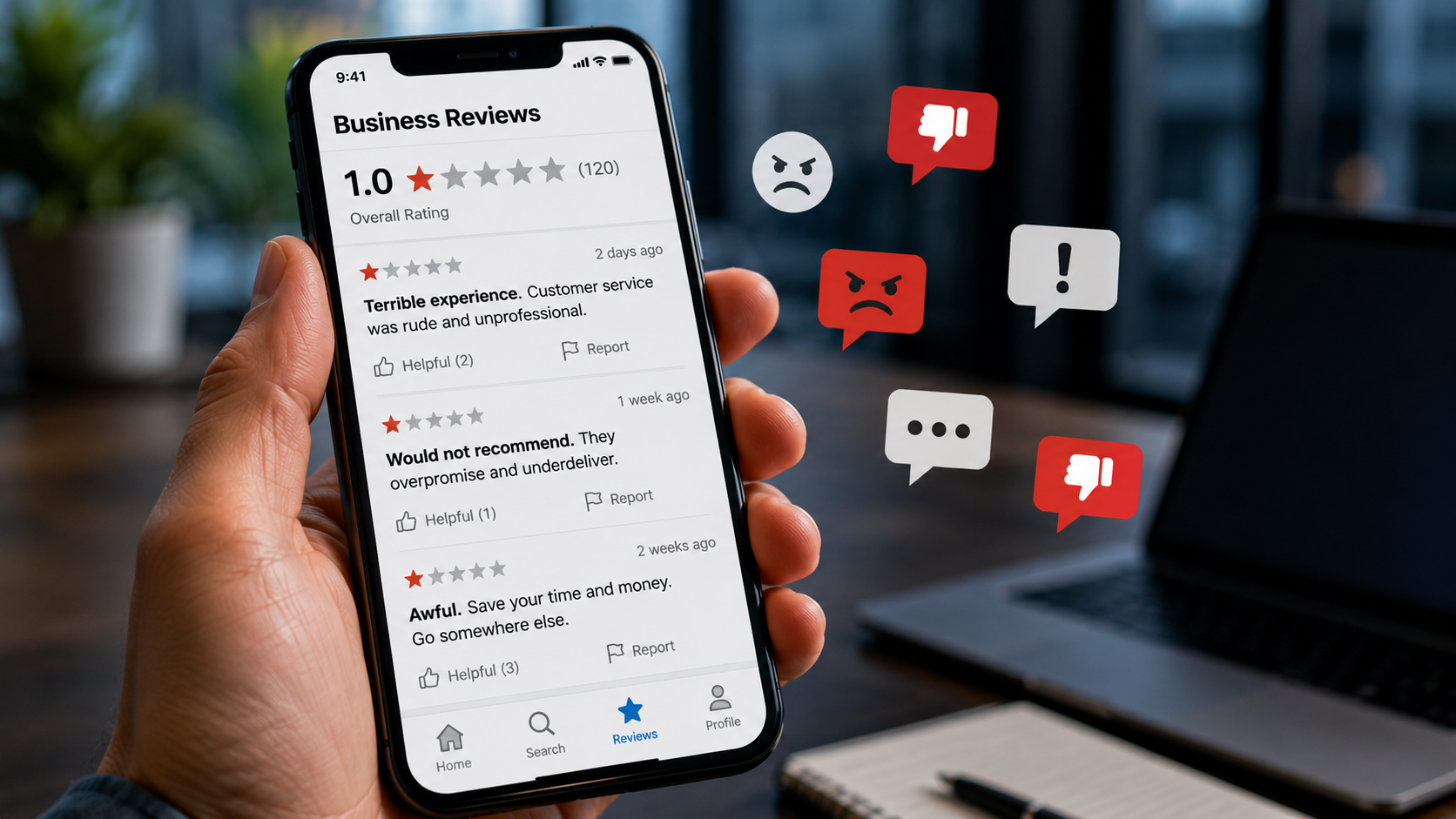
A former employee accuses your company of stealing from customers. A competitor claims online that your medical practice is committing fraud. A reviewer says your restaurant knowingly serves unsafe food. Then the allegation begins appearing in search results, social media discussions, reposts, or messages from customers and business partners asking whether it is true.
When a false accusation starts spreading online, the instinct to respond immediately is understandable. You may want the post removed, the speaker confronted, and the record corrected before the allegation reaches more customers, employees, vendors, or business partners.
But not every damaging statement is legally actionable. And an aggressive response made before you understand what was actually said, who said it, and how far it has spread can turn a limited problem into a larger reputational crisis.
For a Florida business facing online accusations, the first step is to determine whether the statement is potentially defamatory, preserve the available evidence, and decide on a response that accounts for both litigation and reputation.
Is a Negative Online Statement About Your Business Defamation?
A statement does not become defamation simply because it is unfair, insulting, or harmful to your company's reputation.
Under Florida law, a defamation claim begins with a false and defamatory statement communicated to someone other than the person or business being discussed. What a business must ultimately prove depends on the circumstances, including the nature of the accusation, who is bringing the claim, the legal standard that applies, and the harm connected to the publication.
Courts also distinguish actionable factual assertions from nonactionable pure opinion and rhetorical hyperbole. But describing something as an opinion does not automatically make it protected if the statement implies undisclosed defamatory facts.
That distinction matters considerably online.
Consider the difference between these statements:
"This was the worst contractor I have ever hired."
and:
"This contractor took my $20,000 deposit and never performed any work."
The first is a subjective evaluation. The second makes a specific factual accusation that is capable of being proven true or false.
The same distinction can arise when someone accuses a business of fraud, theft, unsafe practices, falsifying records, violating the law, or engaging in other misconduct.
Is the Statement a False Fact or Protected Opinion?
Businesses should be careful about isolating a few words from the larger post.
Courts examine the statement in context when deciding whether a reasonable reader would understand it as asserting a fact or expressing an opinion, exaggeration, or rhetorical criticism.
Florida courts generally treat whether challenged language expresses actionable fact or nonactionable pure opinion or rhetorical hyperbole as a legal question for the court.
That means calling someone a "terrible business owner" presents a different issue from claiming that the owner falsified invoices.
A one-star review is not automatically defamatory. Neither is an angry social media post.
The questions become more specific:
- What exactly did the person say?
- How would a reasonable reader understand the statement in context?
- Can that assertion be proven true or false?
- What surrounding statements or circumstances affect its meaning?
- Who was the intended audience?
Those questions should be answered before a business threatens litigation.
Preserve the Online Evidence Before It Changes
Online content can disappear quickly.
Posts are deleted. Reviews are edited. Usernames change. Comments multiply. A post that initially received little attention can later be copied onto another platform or circulated privately among customers.
If an accusation could become part of a legal dispute, preserve more than a cropped screenshot.
Useful evidence can include:
- full screenshots showing the statement and surrounding context
- the URL and platform where it appeared
- the speaker's username or profile information
- dates and timestamps
- edits or later versions of the post
- comments, shares, reposts, or other evidence of distribution
- communications with the person who made the statement
- messages from customers or business partners referring to the allegation
- records showing canceled appointments, terminated contracts, lost sales, lost business opportunities, or other identifiable financial consequences
Businesses should also preserve their own records that bear on whether the accusation is true or false.
If someone claims your company never performed contracted work, for example, contracts, invoices, project records, photographs, emails, and payment records could become as important as the online post itself.
Who Posted the Statement, and Does It Matter?
The identity of the speaker can change the legal and practical response.
A false accusation from a former employee presents different issues than an anonymous Google review. A competitor accusing your company of misconduct creates a different factual and strategic problem from a dissatisfied customer describing a service dispute.
It is also important to separate the person or business that created the statement from the website or social media service where it appeared. Section 230 of federal law generally prevents a provider or user of an interactive computer service from being treated as the publisher or speaker of information provided by another information content provider.
That distinction often limits claims based solely on a platform's decision to host third-party content. It does not eliminate the need to evaluate the conduct of the person or business that actually created the allegedly defamatory statement.
Before taking action, identify who originally created the accusation, where it was first published, which accounts or websites repeated it, and how customers or business partners encountered it.
Should You Respond Publicly or Threaten a Defamation Lawsuit?
Not necessarily.
When a false statement feels outrageous, sending a threatening letter or posting an angry response can feel like the fastest way to regain control.
A public confrontation can draw additional attention to the accusation and lead to more posts, screenshots, comments, or media interest. An impulsive response can also create inconsistent statements that become relevant if litigation follows.
Silence is not automatically the right answer either.
Depending on the circumstances, the response could include a private demand for correction or removal, use of the platform's reporting process, a carefully planned public statement, formal pre-suit steps, or litigation.
At Forge Litigation Group, we approach defamation and business disparagement disputes with both the legal strategy and the broader reputational consequences in mind. A response that appears useful from a litigation perspective can have very different consequences once it reaches customers, employees, business partners, or the public.
The important point is that the legal response and the communications response should not be planned independently. The goal is not simply to respond quickly. It is to choose a response that protects the business without unnecessarily increasing its legal or reputational exposure.
Before Filing a Florida Defamation Lawsuit, Determine Whether Presuit Notice Is Required
Timing and procedure matter too. Florida law imposes presuit requirements in certain defamation cases.
For claims within the scope of section 770.01, the plaintiff must provide written notice at least five days before filing suit, identifying the publication or broadcast and the statements alleged to be false and defamatory.
Whether Chapter 770 applies to a particular online statement or defendant depends on the circumstances. That is why the applicable pre-suit requirements should be evaluated before a defamation action is filed.
Before You Sue, Decide What Outcome Protects the Business
The most important question is not always whether you can file a lawsuit.
The better question is what response best protects the business. That requires looking at the complete situation.
- Is the accusation actually being seen by customers?
- Has the speaker repeated the accusation on other websites, social media accounts, review platforms, emails, or messages?
- Have customers canceled appointments, vendors raised concerns, investors asked questions, or business partners changed how they deal with the company?
- Would litigation expose confidential information or generate additional publicity?
- Is stopping or correcting the spread of the allegation more important to the business than pursuing monetary damages?
- Is the speaker a former employee or business partner involved in another dispute?
- Could responding publicly make the accusation more visible?
When false online accusations threaten a business, the legal question and the reputational problem cannot always be separated. A sound response starts with understanding exactly what was said, preserving the evidence, identifying the source and audience, and evaluating the consequences of each available option before escalating the dispute.
Get Strategic Guidance for Online Defamation Affecting Your Florida Business
At Forge Litigation Group, we represent Florida businesses and individuals in high-stakes disputes involving defamation, business disparagement, commercial litigation, and reputational harm.
If false statements are threatening your Florida business, we can help you evaluate what was said, what is at stake, and how to respond without losing sight of the broader legal and business consequences. Contact Forge Litigation Group to discuss your situation with a Miami business defamation attorney.
Disclaimer: This article is for general informational purposes only and does not constitute legal advice or create an attorney-client relationship. Legal rights and options depend on the specific facts and circumstances involved. For advice regarding your situation, contact a qualified attorney.